As of 2026-02-21: Only genuine, government‑issued IDs (and REAL ID–compliant where required) are lawful and reliably accepted. Fake IDs are illegal nationwide and can lead to fines, criminal records, license suspensions, and identity‑theft exposure. Laws change; verify your state’s current rules.
Key takeaways
- A fake ID is illegal to possess, use, make, or sell; a real, state‑issued ID (or passport) is the only lawful choice for official purposes.
- For domestic flights and many federal facilities, you need a REAL ID–compliant license/ID or an acceptable federal ID (e.g., passport), per TSA.
- Consequences for fake IDs can include criminal charges, fines, license suspension, and long‑term impacts on jobs or immigration.
- Fake‑ID vendors also expose you to identity‑theft and scams; sharing your personal data can create lasting harm.
- Best path: apply for or upgrade to a REAL ID through your state DMV, or use a passport.
What’s the difference?
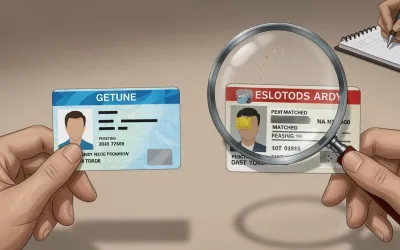
Real IDs (including REAL ID–compliant cards) are issued by government agencies and appear on official lists of acceptable documents for specific purposes like domestic air travel, employment verification, and banking. Fake IDs are unlawful imitations or altered documents. The practical result is simple: real IDs work lawfully; fake IDs can get you turned away, cited, arrested, or referred to investigators.
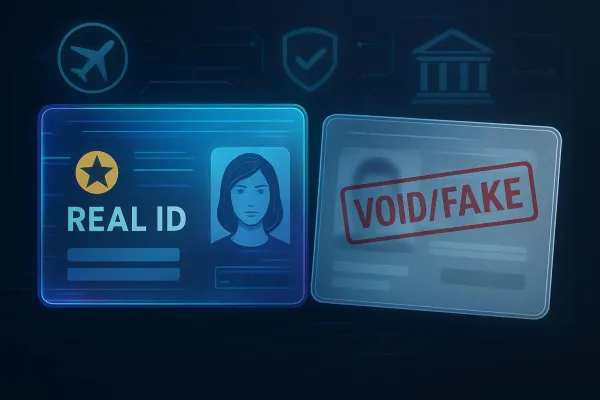
To keep terms clear in this article: “Real ID” refers broadly to genuine government‑issued identification. “REAL ID” refers specifically to the federal security standard for state driver’s licenses and ID cards used for official purposes (e.g., boarding domestic flights). You can confirm REAL ID status by the star or state‑specific marking and by checking agency guidance from the Transportation Security Administration and the Department of Homeland Security.
Fake IDs vs Real IDs: side‑by‑side comparison
As of 2026-02-21. Laws and policies vary by state and can change.
|
Dimension |
Fake ID |
Real/REAL ID |
|
Legality |
Unlawful to possess/use/manufacture/transfer under federal and state laws |
Lawful governmentissued identification |
|
Typical penalty exposure |
Ranges from misdemeanors to felonies; fines, possible jail, license suspension; federal charges possible |
None for lawful possession/use; penalties only for misuse |
|
Acceptance for official purposes |
Not accepted for TSA, federal facilities, I9, banking KYC |
Accepted when compliant: REAL ID or other federal IDs for TSA; genuine state IDs for age and List B I9 (with List C) |
|
Security features |
Often crude or mismatched data; lacks validated digital/optical protections |
Visual/tactile/digital safeguards; state designs aligned to REAL ID standards |
|
Detection likelihood |
High risk of detection by trained staff or scanners; seizure and referral to law enforcement common |
Routine acceptance when valid and unexpired |
|
Data/privacy risk |
Very high—sharing PII with illicit sellers invites identity theft and fraud |
Low when obtained via state DMV/passport agency |
|
Cost and total risk |
Apparent “price” is irrelevant; true costs include fines, legal fees, longterm record impacts |
Standard DMV/passport fees; predictable and lawful |
|
Path to remediation |
Legal defense needed; potential diversion/expungement varies by state; identitytheft recovery may be required |
Normal renewal/replacement through DMV or passport agency |
|
Travel readiness |
Not accepted for flights |
REAL IDcompliant license/ID or passport/passport card acceptable for domestic flights |
Best lawful choice by scenario
Domestic flights and federal facilities
Use a REAL ID–compliant driver’s license/state ID or another acceptable federal ID such as a U.S. passport, passport card, or Trusted Traveler card. TSA states that adults 18+ must present acceptable identification for screening; REAL ID enforcement began May 7, 2025. See the agency’s guidance on the acceptable IDs list and REAL ID overview for specifics.
Proving age for alcohol or tobacco
Present your genuine, unaltered state‑issued ID or driver’s license. Using a fake ID to buy alcohol can lead to citations, court appearances, fines, and—depending on the state—driver license suspension.
Employment (Form I‑9) and banking KYC
For I‑9, bring an acceptable List A document (for example, a U.S. passport) or a List B identity document (such as a state driver’s license/ID) together with a List C work‑authorization document (such as an unrestricted Social Security card). Banks follow KYC rules and will not accept forged IDs; attempts can prompt fraud referrals.
Online onboarding and deliveries
Platforms and delivery services increasingly verify identity. A real, valid ID is necessary; a fake ID risks account bans and possible law‑enforcement referral.
A simple decision tree (text version)
- Need to fly domestically or enter a federal facility? Use a REAL ID–compliant license/ID or a passport.
- Need to prove age for alcohol/tobacco? Use your genuine state ID or driver’s license.
- Need to verify identity for a job or bank? Use documents listed on I‑9 or bank KYC rules—never a fake.
- Considering buying a fake ID online? Don’t. The legal and identity‑theft risks far exceed any short‑term goal.
Quick checklist for next steps:
- Check your card for the REAL ID star or wording like “Not for federal identification” (if present, upgrade before you fly).
- Visit your state DMV to see REAL ID document requirements and fees.
- Keep a passport as a universal alternative when possible.
- If you’ve shared personal data with illicit sellers, place fraud alerts and review FTC identity‑theft recovery guidance.
Penalties and real‑world consequences
At the federal level, fraud involving identification documents is a crime under 18 U.S.C. §1028; aggravated identity theft under §1028A adds a mandatory consecutive prison term when tied to specific predicate offenses. States layer their own statutes, ranging from misdemeanors for under‑21 alcohol violations to felonies for manufacturing or trafficking fraudulent IDs. Examples include California’s Business and Professions Code §25661 (underage alcohol), Florida’s §322.212 (counterfeit or unlawfully issued license/ID), New York’s enforcement actions tied to alcohol control and DMV rules, and Pennsylvania’s §6310.3 (false identification card). Penalties and license sanctions vary, and enforcement programs regularly seize fake IDs at venues and events.
Security features and detection likelihood
REAL ID standards set higher security baselines for state cards, and DMVs periodically refresh designs. In California, a 2025 redesign introduced advanced security features, including a digital security signature in the 2D barcode and removal of magnetic stripes; current cards remain valid until expiration. Enforcement programs such as New York’s Operation Prevent routinely report large numbers of fake IDs seized at concerts and bars, with citations and license suspensions common. The takeaway: counterfeiters struggle to keep up with evolving, layered safeguards, and trained staff plus scanners frequently spot discrepancies.
Data privacy and fraud exposure
Engaging with fake‑ID sellers means giving criminals your personal data. That opens the door to identity theft, account takeovers, and long‑term harm. If you’ve already shared information, follow established recovery steps, including placing fraud alerts, monitoring your credit, and using federal identity‑theft resources.
FAQ
Is it illegal to have a fake ID in the U.S.?
Yes. Federal law criminalizes conduct involving false identification documents. States add their own offenses for possession, display, manufacture, or sale. Penalties and license sanctions vary by jurisdiction.
Is REAL ID required to fly domestically?
Yes—REAL ID enforcement for TSA screening began May 7, 2025. Adults 18+ must present a REAL ID–compliant license/ID or another acceptable federal ID, such as a passport or passport card.
Are all state IDs REAL ID now?
No. Some licenses/IDs are standard (marked “Not for federal identification” or similar). Check for the star or state‑specific marking and confirm requirements before you travel.
Can a bar keep my ID if they think it’s fake?
Policies vary by state. For example, California licensees may seize suspected false IDs, must provide a receipt, and must turn them over to law enforcement promptly; venues generally coordinate with local authorities.
What documents work for employment (I‑9)?
Employers must examine documents from the official I‑9 Lists of Acceptable Documents. A U.S. passport (List A) works by itself; otherwise, a state driver’s license/ID (List B) must be paired with a List C document like an unrestricted Social Security card.
How do I get a REAL ID?
Visit your state DMV site to review required proofs of identity, Social Security, and residency. Bring originals (or acceptable copies where permitted) and plan for in‑person verification.
Sources and further reading (authoritative)
- For REAL ID enforcement dates and acceptable identification for flights, see the Transportation Security Administration’s guidance on REAL ID and its list of acceptable IDs.
- For the federal statute on identification document fraud and aggravated identity theft, consult 18 U.S.C. §§1028 and 1028A via Congress.gov or DOJ summaries.
- For I‑9 (employment eligibility), see USCIS I‑9 Central and the current Lists of Acceptable Documents.
- For venue seizure procedures (example) and alcohol‑related fake‑ID rules, see California’s Department of Alcoholic Beverage Control resources.
- For enforcement actions and detection trends at venues, review New York DMV’s Operation Prevent news posts.
- For identity‑theft recovery guidance, use the FTC’s Consumer Advice and IdentityTheft.gov resources.
This article is for general education, not legal advice. Laws and penalties change; verify current rules with your state DMV or a licensed attorney. The comparison above uses representative examples and federal guidance as of 2026-02-21.