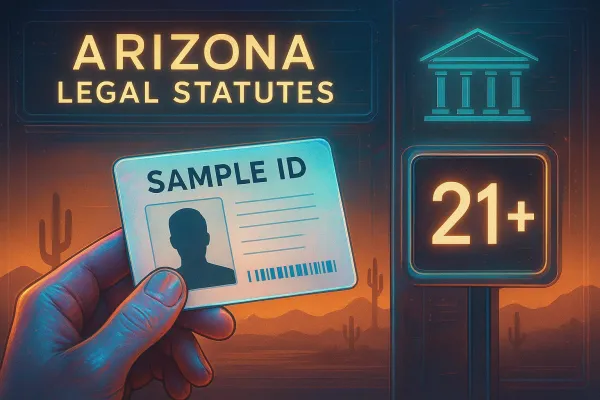
Using or possessing a fake ID in Arizona can lead to criminal exposure, especially around alcohol-related conduct. This neutral explainer defines the core statutes, penalty classifications, and common scenarios so you can understand where the law draws the line. This article is educational and not legal advice—if you’re facing a charge, consult a licensed Arizona attorney.
Key takeaways
- “Arizona fake ID laws” primarily refer to alcohol-focused rules in A.R.S. § 4-241 and penalty classifications in A.R.S. § 4-246.
- Under § 4-241, misrepresenting age, using another person’s ID, or using false identification to obtain or enter for alcohol when under 21 is prohibited.
- Title 4 violations are generally Class 2 misdemeanors by default under § 4-246 unless a specific subsection prescribes otherwise; sentencing ranges then come from Title 13.
- Typical misdemeanor ranges: Class 1 (up to 6 months jail; up to $2,500 fine), Class 2 (up to 4 months; up to $750), Class 3 (up to 30 days; up to $500), with probation options per Title 13.
- Beyond alcohol, certain conduct (e.g., forging IDs, identity-based fraud) can implicate Title 13 crimes like forgery or criminal impersonation.
- The Arizona Department of Liquor urges strict age verification; questionable IDs may lead to refusal of service.
What A.R.S. § 4-241 actually prohibits
According to A.R.S. § 4-241, licensees (and their employees or agents) must not sell, give, or furnish spirituous liquor to a person under 21. The statute also makes it unlawful for a person under 21 to obtain or attempt to obtain alcohol by misrepresenting age, by using false identification, or by presenting another person’s ID.
The statute goes beyond prohibitions and outlines acceptable identification and verification duties. In practice, a licensee must examine government-issued, valid, unexpired identification that includes a photograph and date of birth, compare the photo carefully, and confirm the birthdate reflects legal age. When licensees follow the verification procedures described in the statute, they gain compliance protections.
For readers asking “Where do Arizona fake ID laws start?,” § 4-241 is the core text that anchors misrepresentation and false ID use in alcohol contexts.
How penalties are classified under Title 4 and Title 13
Arizona separates the conduct (Title 4) from how violations are classified and punished (Title 4 and Title 13). The default rule in A.R.S. § 4-246 is that violations of Title 4 are Class 2 misdemeanors unless another classification is prescribed. Certain provisions carry minimum fine add-ons; specific subsections of § 4-241 may reference additional penalties. Once a violation’s class is determined, sentencing ranges, fines, and probation limits come from Title 13.
Below is a quick reference to typical misdemeanor ranges drawn from Title 13. Always confirm the exact class for the charged subsection before applying these ranges:
|
Misdemeanor Class |
Jail (up to) |
Fine (up to) |
Probation (up to) |
|
Class 1 |
6 months |
$2,500 |
3 years |
|
Class 2 |
4 months |
$7500 |
2years |
|
Class 3 |
30 days |
$500 |
1 years |
References: A.R.S. § 13-707 (sentencing), A.R.S. § 13-802 (fines), and A.R.S. § 13-902 (probation).
Practically speaking, many alcohol-related fake ID cases are charged as misdemeanors, and courts may consider diversion or probation, especially for first-time offenders. Defense attorneys often explain these outcomes in approachable terms—see, for example, an Arizona overview from Salwin Law’s fake ID penalty explainer (contextual discussion; statutes control).
Common enforcement scenarios under Arizona fake ID laws
Most real-world cases arise in alcohol settings:
- Entry or purchase attempts when under 21: Presenting a false or borrowed ID at a bar, club, or store to enter or buy alcohol can trigger charges under § 4-241.
- Presenting to police or security: If questioned, showing a fake or someone else’s ID can compound the situation. While § 4-241 focuses on alcohol, presenting false credentials may also raise issues under Title 13 (depending on intent and context).
- Using another person’s ID: Borrowing a friend’s ID to pass an age check is explicitly covered; it’s a common misconception that “borrowing” is safer—it’s still prohibited.
- Online use: Uploading altered or fabricated ID images to age-gate an alcohol delivery or membership can fall within the same prohibitions when tied to obtaining alcohol.
Enforcement varies by circumstances and local practices, but merchants and staff are trained to deny service and document incidents when an ID appears fake.
When fake ID conduct goes beyond alcohol
If a fake ID is used outside alcohol contexts to obtain financial benefits, evade law enforcement, or access restricted services, Title 13 exposure is possible. Examples include:
- Forgery: Offering, possessing, or making a forged written instrument with intent to defraud can be charged under A.R.S. § 13-2002.
- Criminal impersonation: Assuming a false identity with intent to defraud fits A.R.S. § 13-2006.
- Taking identity of another: Using another person’s identity without consent to obtain benefits or cause loss implicates A.R.S. § 13-2008.
In specific federal jurisdictional circumstances—such as producing or trafficking in false identification documents—federal law may apply. For context, see the U.S. Code’s fraud provisions on identification documents (18 U.S.C. § 1028) via the official statute collection.
Practical compliance: age verification and refusals
Arizona’s regulator emphasizes consistent, careful ID checks. The Arizona Department of Liquor Licenses & Control advises accepting only valid, unexpired government-issued IDs with a photo and date of birth, and scrutinizing for signs of tampering. If validity is in doubt, deny service and follow responsible service procedures. See DLLC guidance on age verification practices.
For licensees and staff, compliance protects the public and can reduce liability when procedures are followed. For customers, understanding that a suspicious ID will likely lead to refusal can prevent escalation.
FAQs
-
Will I go to jail for a fake ID related to alcohol?
- It depends on the specific subsection and classification. Many cases are misdemeanors; ranges come from Title 13 (see above). Courts sometimes consider diversion or probation, especially for first offenses. Always consult counsel.
-
Are fines mandatory for certain fake ID offenses?
- Some subsections carry minimum fine add-ons under § 4-246. The operative codified text controls; check the exact subsection charged.
-
Does Arizona suspend driver’s licenses for fake ID cases?
- Some defense sources discuss potential license impacts, but confirm through official MVD rules before relying on that outcome. Your attorney can advise based on current regulations.
-
Can a record be sealed after a misdemeanor?
- Arizona allows record sealing for certain offenses under A.R.S. § 13-911 (consult the statute and counsel). Availability depends on the case specifics.
Props-only clarification
This article does not encourage misuse. Novelty or prop cards that resemble government IDs can still cause problems if presented as genuine. Venues may ban realistic prop IDs, and suspected items may be refused or seized by staff or security even without criminal charges. The safest course is to avoid any use that could be mistaken for a real government ID.
Sources and further reading
- Core statutes: A.R.S. § 4-241; A.R.S. § 4-246; A.R.S. § 13-707; A.R.S. § 13-802; A.R.S. § 13-902.
- Title 13 broader context: A.R.S. § 13-2002; A.R.S. § 13-2006; A.R.S. § 13-2008.
- Federal context: 18 U.S.C. § 1028 (identification documents).
- Regulator guidance: DLLC age verification.
- Attorney context (non-authoritative): Salwin Law overview of fake ID penalties.
Disclaimer: Laws change, and outcomes depend on facts. This explainer isn’t legal advice. If you have a charge or a specific question, speak with an Arizona-licensed attorney.