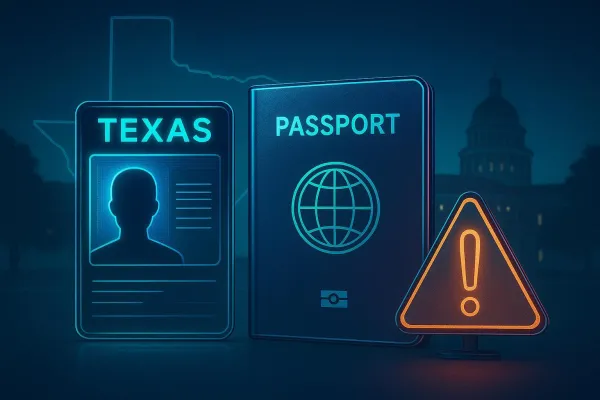
Thinking about buy a fake Texas ID to get into a bar or club? For non‑citizens, the risk is far bigger than a ticket. Missteps with IDs can create immigration problems that echo for years, even if the criminal case seems “minor.”
Key takeaways
- For non‑citizens, presenting fake identification can be used as evidence of fraud or misrepresentation in immigration settings. Some mistakes trigger bars to visas or green cards.
- Texas charges still matter: alcohol‑related minor offenses, tampering with a governmental record, and driver‑license/ID violations can stack up and affect background checks and school discipline.
- DPS/DMV actions (like license suspensions) may follow certain underage alcohol offenses; deadlines to contest can be short.
- Federal law appears when there’s production/trafficking of fake IDs, stolen identities, interstate conduct, or federal documents (like passports).
- If you’re stopped: say as little as required, don’t discuss citizenship, and ask for a lawyer. Then speak with both a criminal defense and an immigration attorney.
Quick facts on Texas fake‑ID crimes
Texas has several laws that show up in student cases. If a minor lies about being 21 or shows a document indicating they’re 21 to obtain alcohol, the Alcoholic Beverage Code treats it as an offense, with penalties (fines, alcohol awareness class, community service, and license consequences for certain ages/priors) summarized by the state alcohol regulator. See the state’s overview of underage penalties in the TABC’s page on underage drinking consequences.
Using or possessing a fake government ID can also bring a more serious charge: Tampering with a Governmental Record under Penal Code §37.10. That statute covers making, presenting, using, or possessing a falsified government record with knowledge it’s false; penalty levels vary by conduct and intent. Read the current statutory language via this Penal Code §37.10 reference.
Driver license/ID‑specific rules live in Transportation Code Chapter 521. These provisions address things like possessing or displaying a fictitious or materially altered driver license, or lending/borrowing someone else’s license. Exact penalty classes depend on the section and facts; check the official Chapter 521 text before assuming it’s “just a ticket.”
Immigration risks you shouldn’t ignore — Texas fake ID immigration consequences
Here’s the part most students miss. Under U.S. immigration law, a non‑citizen who willfully lies about a material fact to get an immigration benefit (like a visa, admission at the airport, or certain work permissions) is inadmissible. USCIS explains the elements and limited waiver process (Form I‑601, extreme‑hardship standard) in its Policy Manual on fraud and willful misrepresentation. That’s why anything that looks like intentional deception can cast a long shadow.
There’s also a distinct, very severe rule: making a false claim to U.S. citizenship. It’s a separate ground of inadmissibility with extremely limited exceptions. Cornell’s LII hosts the current text of 8 U.S.C. §1182, which includes both willful misrepresentation and the false‑citizenship provision; see the statutory discussion in 8 U.S.C. §1182 (INA §212).
Mini‑scenarios to make this real:
- Bar entry with a fake: If the only context is trying to get into a club, you’re looking at state charges and campus discipline risk. Immigration trouble grows if statements or documents later get used in immigration processes as evidence of dishonesty.
- Using fake documents to get work or an immigration benefit: This can directly implicate willful misrepresentation, and if you ever claim to be a U.S. citizen, that’s a near‑permanent bar with few escape hatches.
One more wrinkle: “conviction” for immigration purposes isn’t the same as in everyday speech. Many deferred outcomes or expungements can still count if there was a plea or admission and some penalty was imposed, unless a court later vacates the case on legal grounds. Bottom line: don’t count on record‑clearing to solve immigration exposure.
What to do right now if you’re stopped or cited
If you’re approached by police or campus officers and an ID issue comes up, slow everything down. Your short‑term choices often decide your long‑term options.
- Provide required ID if you have lawful ID, but otherwise say you wish to remain silent and want a lawyer.
- Do not answer questions about where you were born, your citizenship, or your immigration status.
- Do not consent to searches of your phone, bag, or dorm without a warrant.
- Ask to call a criminal defense attorney and, if you’re a non‑citizen, an immigration attorney as soon as possible.
- Contact your university’s international student office for support and documentation guidance.
If your license is at risk of administrative suspension, Texas DPS runs time‑sensitive hearings; start with the DPS Driver License Hearings portal to understand deadlines.
Helpful resources
Keep these official sources handy as you assess next steps and talk with counsel:
- The TABC’s underage‑offense penalties page explains fines, classes, and community service requirements, and it points to the statutes you’ll hear about in court. The Penal Code §37.10 reference shows how Texas treats fake or altered government records. USCIS’s fraud/misrepresentation guidance and 8 U.S.C. §1182 spell out why honesty matters so much in immigration cases. The DPS hearings portal outlines license‑related timelines.
Texas fake ID immigration consequences aren’t hypothetical—they’re the reason to hit pause before using a bogus card. If you’re already facing a citation or arrest, speak with a qualified Texas criminal defense lawyer and an experienced immigration attorney before you make statements, accept a plea, or assume a campus outcome will “fix it.”
Disclaimer: This FAQ is for general information only and isn’t legal advice. Laws change, facts matter, and outcomes vary. Consult licensed Texas criminal defense and immigration counsel about your specific situation.