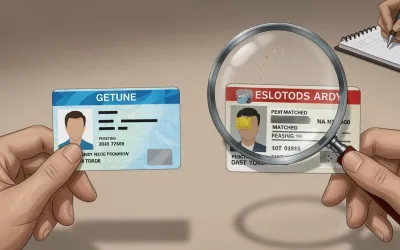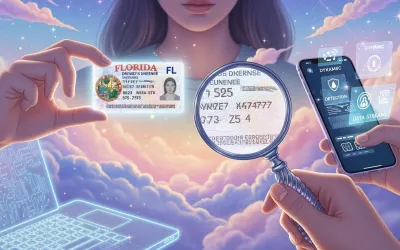
If you work in campus security or student affairs, you field the same question every fall: how often do bars and liquor stores actually catch fake IDs? The short answer is that reliable national numbers don’t exist. The better answer is that detection depends on venue practices you can influence—training, technology, staffing, and partnerships. This guide explains how detection works in the real world, what raises or lowers the chance a fake is caught, and how universities can collaborate with local venues to measure and improve outcomes.
Key takeaways
- There is no single national statistic for fake ID detection rates in nightlife and retail alcohol settings; methodology varies and most data is anecdotal.
- Detection improves with consistent visual checks, scanner-assisted verification aligned to AAMVA standards, strong door workflows, and supervisor oversight.
- Detection drops during peak hours, when staff are undertrained, when scanners are absent or misused, and when high-quality counterfeits circulate.
- State regulators outline acceptable IDs and reasonable reliance defenses; rules around confiscating suspected fakes differ by jurisdiction.
- The most practical path is local: standardize a 60-second ID check, log refusals and suspected fakes, and run joint trainings with nearby venues.
What “detection rate” really means
In this context, a detection rate is the share of attempted entries or alcohol purchases by underage patrons using counterfeit, borrowed, or altered IDs that are identified and denied at the door or point of sale over a defined period. That sounds straightforward, but measurement is tricky:
- Venue logs are inconsistent, and many refusals aren’t recorded.
- State compliance stings don’t reflect nightly operations and shouldn’t be generalized.
- Technology varies widely, from simple visual checks to barcode scanners reading AAMVA-compliant data.
The technical baseline most venues rely on is the AAMVA DL/ID Card Design Standard, which specifies security features and the PDF417 2D barcode used for age verification. It guides what scanners can reasonably validate and where their limits are, but it does not set a “national detection rate.” See the authoritative standard in the AAMVA DL/ID Card Design Standard published in 2025 for details on data elements and structure. According to the AAMVA document on the DL/ID card design standard, scanners read the barcode to compute age and check data consistency, but staff still need to match the photo and physical descriptors to the person presenting the ID. You can review the specification in the AAMVA DL/ID Card Design Standard (2025) and related program materials: the standard is published by the American Association of Motor Vehicle Administrators and is publicly accessible as a PDF.
- AAMVA DL/ID Card Design Standard (2025): https://www.aamva.org/getmedia/81af105d-8b1b-45e1-aa46-f1800a259ed1/AAMVADLIDCardDesignStandard2025.pdf
How IDs are checked in practice
Most venues combine visual/tactile inspection with scanner-assisted verification.
-
Visual and tactile checks: California’s Department of Alcoholic Beverage Control explains how to examine an ID—check both sides, verify the portrait and physical description, feel for tampering, read the expiration date, and ask verifying questions that match the card. See California ABC’s guidance on checking identification for the step-by-step elements licensees are trained to perform: https://www.abc.ca.gov/education/licensee-education/checking-identification/
-
Scanner-assisted checks: Scanners read the PDF417 barcode to pull date of birth and compute age; some devices also validate data format and issuing jurisdiction patterns consistent with AAMVA. Regulators emphasize scanners complement, not replace, staff diligence. Pennsylvania’s Liquor Control Board legal FAQ explains acceptable IDs and contexts where scanning is used as part of a defense, and Texas’s Alcoholic Beverage Commission outlines age verification practices and enforcement context. See the Pennsylvania Liquor Control Board identification information FAQ: https://www.pa.gov/content/dam/copapwp-pagov/en/lcb/documents/legal/documents/legal_faqs_identification_information.pdf and the Texas Alcoholic Beverage Commission’s age verification overview: https://www.tabc.texas.gov/texas-alcohol-laws-regulations/age-verification/
Disclosure: My Brand is our product. For staff refreshers on visual checks, a concise, practical walkthrough can help. A neutral resource you can use in trainings is this step-by-step guide on spotting counterfeit features and doing quick DOB math in “How do you know if an ID is fake,” which provides a staff-friendly overview you can adapt for local policies: https://www.fakeids.ph/news/how-do-you-know-if-an-id-is-fake
What scanners do and don’t do
|
Scanners do |
Scanners don’t |
|
Read the 2D barcode (PDF417) to compute age from date of birth |
Guarantee the card isn’t a high-quality counterfeit with a cloned barcode |
|
Validate data layout and issuing-jurisdiction patterns per AAMVA structure |
Replace the need to match the person to the portrait and physical descriptor |
|
Flag obvious formatting errors or expired IDs |
Detect every borrowed ID where the real cardholder is not present |
|
Create logs that can support administrative defenses and training |
Eliminate the need for staff training or supervisor oversight |
A 60-second door workflow your partners can adopt
Train door staff to complete a consistent, timed sequence. It should take about a minute—fast enough for a busy line, thorough enough to catch most problems.
- Ask for the ID in hand, not on a phone image. Hold it; don’t let it hover.
- Scan the barcode to compute age and check expiry. If no scanner, move to step 3.
- Compare the portrait to the face. Ask the patron to remove hats and look at you in good light.
- Read the physical descriptors (height, eye color) and quickly sanity-check them.
- Do the DOB math out loud. Confirm the 21+ threshold by month and day.
- Ask a simple verifying question that’s printed on the card, like ZIP code or middle name.
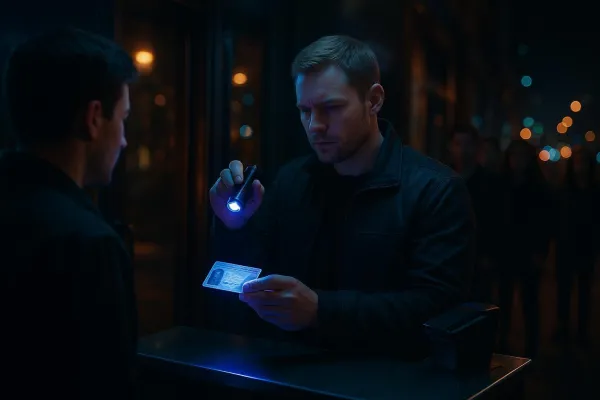
- Feel the card edges and surface for tampering; glance at holograms/optical features under a small UV light.
- If anything is off, politely refuse entry or service, document the attempt, and follow the venue’s escalation plan.
Factors that affect fake ID detection rates
Detection is not a single switch; it’s a system. Here’s how it changes:
- ID quality and counterfeiting tactics: Basic alterations are often caught; high-end counterfeits with cloned barcodes are harder. Scanners help, but they don’t replace human comparison.
- Staff training and turnover: New or untrained door staff miss inconsistencies; trained staff develop a feel for card weight, edges, and micro-details.
- Peak-hour pressure: Lines grow, music gets loud, lighting worsens—attention falls. Supervisors should float to support door staff during rushes.
- Technology and environment: Handheld scanners, a small UV flashlight, and adequate lighting materially improve outcomes. Maintenance and updates matter.
- Policy consistency: If ID checks loosen for friends, VIPs, or during last call, detection tanks and undercuts deterrence.
Legal and risk notes for campus partners and venues
Every jurisdiction has its own rules about acceptable IDs, reasonable reliance, and what to do with suspected fakes. Treat these as guardrails and ensure local counsel or law enforcement validates venue policies.
-
Acceptable IDs and reliance: Massachusetts ABCC’s advisory lists the forms of identification a licensee may reasonably rely on, including Massachusetts and out-of-state driver’s licenses, U.S./foreign passports, and U.S. military IDs. A reliance defense requires that the ID appears valid and that the check is done in connection with the transaction. See the Massachusetts ABCC advisory on forms of ID licensees may reasonably rely on (updated effective 2025): https://www.mass.gov/doc/abcc-advisory-regarding-changes-to-mgl-c-138-ss-34b-forms-of-id-which-licensees-may-reasonably-rely-on/download
-
Confiscation and incident handling: Rules on whether private licensees should seize suspected fake IDs vary and are often ambiguous. California ABC’s “Checking Identification” guidance outlines inspection steps and references statutory provisions, while emphasizing due diligence; many venues default to refusing service and contacting law enforcement rather than seizing. See California ABC’s checking identification guidance: https://www.abc.ca.gov/education/licensee-education/checking-identification/
-
Enforcement and common pitfalls: New York’s State Liquor Authority highlights frequent violations and stresses verification of identity and card validity; partnering with DMV and law enforcement is common in fake ID crackdowns. For context, review New York SLA’s summary of frequent ABC Law violations for retailers: https://sla.ny.gov/frequent-violations-abc-law-retailers
-
Training and defenses: The Texas Alcoholic Beverage Commission’s age-verification pages explain ID characteristics and the role of training in preventing sales to minors, underscoring that technology supports but doesn’t replace trained staff. See TABC’s age verification page: https://www.tabc.texas.gov/texas-alcohol-laws-regulations/age-verification/
When in doubt, venues should refuse service, document the interaction, and consult local enforcement on next steps. Your campus legal team can help align MOUs and training language with state expectations.
Campus–venue collaboration that works
You can meaningfully influence local detection without dictating venue operations. Start with a simple memorandum of understanding: shared training sessions each semester, standard door workflows, de-escalation practices, and a commitment to track refusals. For practical checklists you can adapt, see this North Carolina ID check compliance checklist for alcohol service: https://www.fakeids.ph/news/north-carolina-id-check-compliance-checklist-for-alcohol-service and this New Jersey guidance summarizing staff obligations and liability considerations for nightlife and retail: https://www.fakeids.ph/news/fake-ids-in-new-jersey-what-bar-nightlife-and-retail-staff-need-to-know-to-avoid-liability
Focus the partnership on three themes: consistent checks at doors and POS, rapid communication about emerging fake patterns, and supervisor coverage during peak hours. Think of it this way: if your partners can run the same 60-second workflow every time, your local fake ID detection rates will improve without grinding lines to a halt.
Measure your local fake ID detection rate
If national numbers won’t help you, build local evidence. A simple protocol gets you from speculation to insight in a few weeks:
- Define the observation window: e.g., four Friday/Saturday nights plus one midweek shift.
- Pick the checkpoints: main door and, if relevant, point-of-sale for carry-out.
- Log attempts and outcomes: total IDs checked, refusals, suspected fakes, confirmed fakes (by law enforcement), and reasons noted by staff. Anonymize notes to protect privacy.
- Sample size: Aim for at least 500 ID checks to reduce noise. Larger venues will get there quickly; smaller ones can extend the window.
- Ethics and privacy: Don’t store images of IDs or personal data beyond what’s necessary for an administrative defense; purge logs on a defined schedule and keep access limited.
- Review cadence: Debrief weekly with venue managers; highlight where the workflow broke down and where it worked.
Over time, you’ll estimate your own fake ID detection rates by venue and shift, and you’ll see how training, scanners, lighting, and staffing correlate with outcomes.
What to do next
- Align on a shared 60-second workflow and supervisor coverage for peak hours.
- Set a 30-day local measurement sprint with standardized logging.
- Schedule joint trainings using state regulator materials and practical visual-check guides.
Optional further reading: a practical visual-check refresher is available here if you’re building a training deck: https://www.fakeids.ph/news/how-do-you-know-if-an-id-is-fake